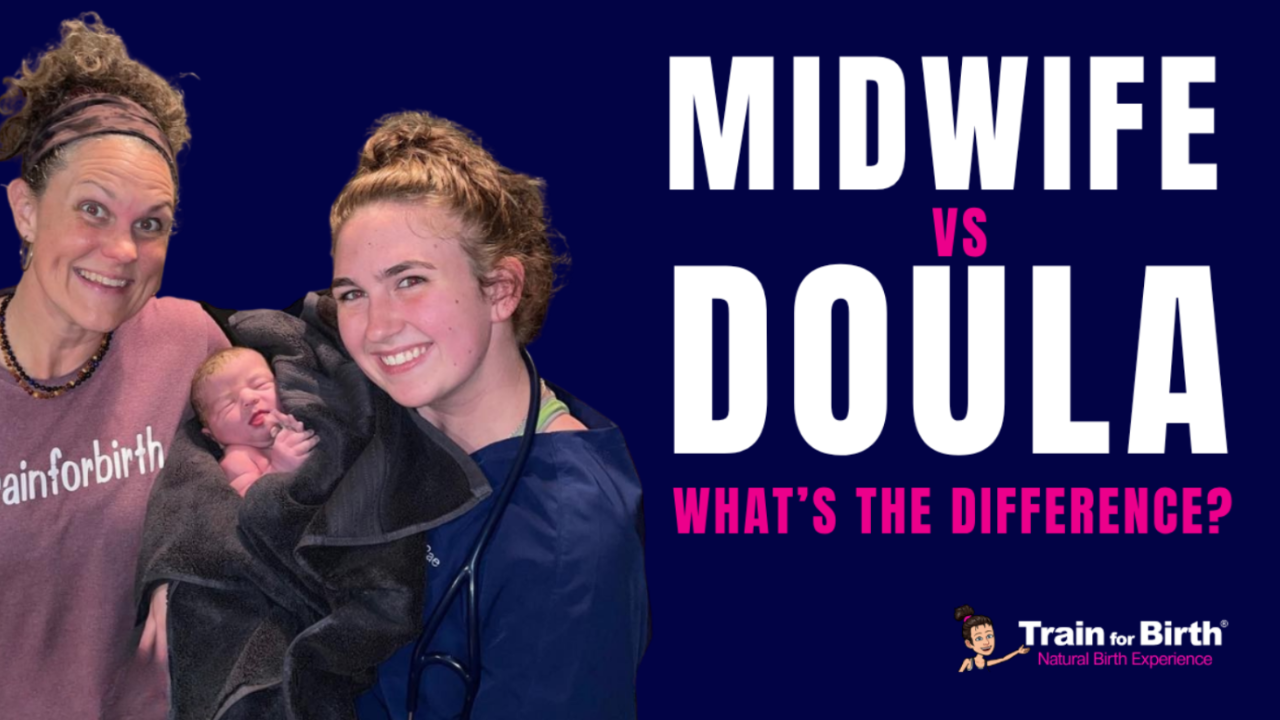
Midwife or Birth Doula? Here's the Difference (And Why You Might Want Both)
It's one of the most common questions in the natural birth space, and the confusion is understandable.
Midwives and doulas both support expecting parents. They both show up at births. They can both be deeply invested in your experience and your outcome.
But they are not the same thing, and knowing the difference could be one of the most important decisions you make for your birth.
The simplest way to put it: midwives are medically trained. Birth doulas are not. Everything else flows from there.
What a Midwife Actually Does
Midwives are clinicians. They are trained to perform medical tasks that monitor and protect the health of both you and your baby throughout pregnancy, labor, and the postpartum period.
That includes:
- Urine and blood testing
- Gestational diabetes and Group B Strep screening
- Blood pressure, pulse, and oxygen monitoring
- Vaginal or cervical checks
- Listening to your baby's heart rate
- Belly measurements throughout pregnancy
- Suturing vaginal or perineal tears after birth
- Prescribing medications, depending on their licensure
- Helping you deliver your baby or catching baby at birth
On the birthing game day, a midwife handles the clinical side of care.
She can catch your baby, guide your partner to catch your baby, manage your immediate postpartum care, deliver your placenta, monitor postpartum bleeding, and perform your newborn's first exam, including weight, height, vitamin K, and eye ointment if consented.
The Different Types of Midwives
Midwifery is not a single credential. There are several designations, and what a midwife can legally do varies by licensure and state law.
- CNM — Certified Nurse Midwife
- CPM — Certified Professional Midwife
- CM — Certified Midwife
- LM — Licensed Midwife
- TM — Traditional Midwife
Some midwives practice without formal licensure in certain parts of the world.
All of them go through a training program and hands-on apprenticeship working alongside experienced midwives before practicing independently.
Midwifery care has existed far longer than the obstetrics specialty.
It is built around the belief that birth is a physiological process, not a medical event, and midwives focus their care on low-risk pregnancies where that philosophy can be fully supported.
How Midwifery Care Works
Most midwives operate under the oversight of a collaborative physician, which can shape and sometimes limit how they practice depending on state law and what their supervising OB permits. It's worth asking about this when you're interviewing midwives so you understand the full picture of what she can and can't do in your specific situation.
Midwives can attend births in homes, freestanding birth centers, and hospital settings.
However, important to note: they are not trained to perform cesareans. If a cesarean becomes necessary, or if a low-risk mom develops complications during pregnancy, care transfers to an OB.
Midwives are also trained in skill sets that go beyond standard hospital birth, including:
- Singleton babies born head down or breech
- Twin births, head down or breech
- Vaginal birth after one, two, three, or even four cesareans
What an individual midwife will take on depends on her own competency, her comfort level, her supervising OB's parameters, and the laws of her state.
Your Timeline With a Midwife
Midwifery prenatal care follows a structured schedule that becomes more frequent as your due date approaches. Typically, it’ll look like this.
→ Up to 28 weeks — Monthly appointments
→ 28 to 36 weeks — Every two weeks
→ 36 weeks to birth — Weekly appointments
→ 2 days postpartum — Home visit (out-of-hospital births)
→ 2 weeks postpartum — Follow-up visit
→ 6 weeks postpartum — Final postpartum check
Beyond the clinical side, midwives also provide physical, emotional, mental, and spiritual support and can guide you in nutrition, hydration, and exercise throughout your pregnancy. Some midwives even offer well-woman care year-round, not just during pregnancy.
What a Birth Doula Does
The word doula comes from Greek, meaning woman caregiver.
And that is exactly what a birth doula is: a dedicated, trained support person whose entire focus is you.
Doulas do not perform any clinical tasks. No cervical checks, no monitoring, no catching babies. What they bring instead is presence, knowledge, and advocacy.
A birth doula has been trained in the stages and phases of labor. She knows what to expect and how to help you move through it.
She comes to your home first, helps you labor down in a comfortable environment, and stays by your side through most of the birthing process. She is typically the first person called and the last to leave.
Doulas work across all birth settings and all birth types: home births, birth centers, hospitals, unmedicated births, medicated births, and cesareans. Her job adapts to your needs and your plan.
What a Doula Actually Changes About Your Birth
This is where the research gets hard to ignore.
Having a birth doula by your side has been shown to:
- Reduce total labor hours
- Lower the use of pain medication
- Lower epidural rates
- Lower Pitocin use
- Reduce the likelihood of forceps or vacuum delivery
- Lower cesarean rates
- Lower the risk of postpartum depression
- Increase breastfeeding success
A doula also helps you build your birth plan, understand your options, and advocate for your choices in the room when it matters most.
Expectant parents consistently report higher satisfaction with their birth experience when a doula was part of their team.
Do You Need Both?
Yes, you can hire both, and many people do.
A midwife and a doula serve completely different roles. The midwife manages the clinical environment. The doula manages your experience inside of it. They are not competing. They are complementary, and both are working for you as a supportive birth team.
Interview as many midwives and doulas as you need to find the people who align with your values, understand your goals, and feel like the right fit. These are the people who will be with you on one of the most vulnerable days of your life.
Choose wisely.
Healthy Mommy, Healthy Baby, Labor On!
Krisha
Stay connected with news and updates!
Join the mailing list for the latest news and updates.
Don't worry, your information will not be shared.
We hate SPAM. We will never sell your information, for any reason.